Research
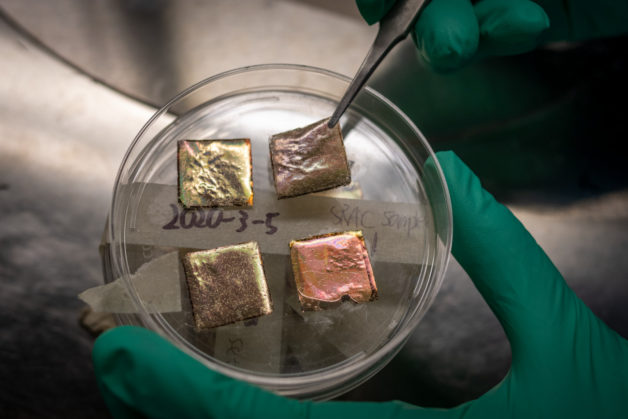
Thermoregulation is essential for both living organisms and operational equipment. However, conventional heating, cooling, and air-conditioning systems account for a substantial share of global energy consumption and generate significant greenhouse gas emissions. By combining photonic metamaterials, nanomaterials, and advanced fabrication techniques, we develop zero-power smart thermoregulation materials that can cool objects during hot summers and retain heat in cold winters. Through strong industrial collaboration, we are demonstrating the broad potential of this innovative technology in applications such as buildings, vehicles, textiles, and power systems.
Our research on zero-power smart thermoregulation materials covers the entire development chain, including nanomaterial synthesis and modification, photonic nanostructure design, mass-production process development, energy-saving performance evaluation, and lifecycle assessment. Artificial intelligence (AI) is actively employed to accelerate progress across these research endeavors.
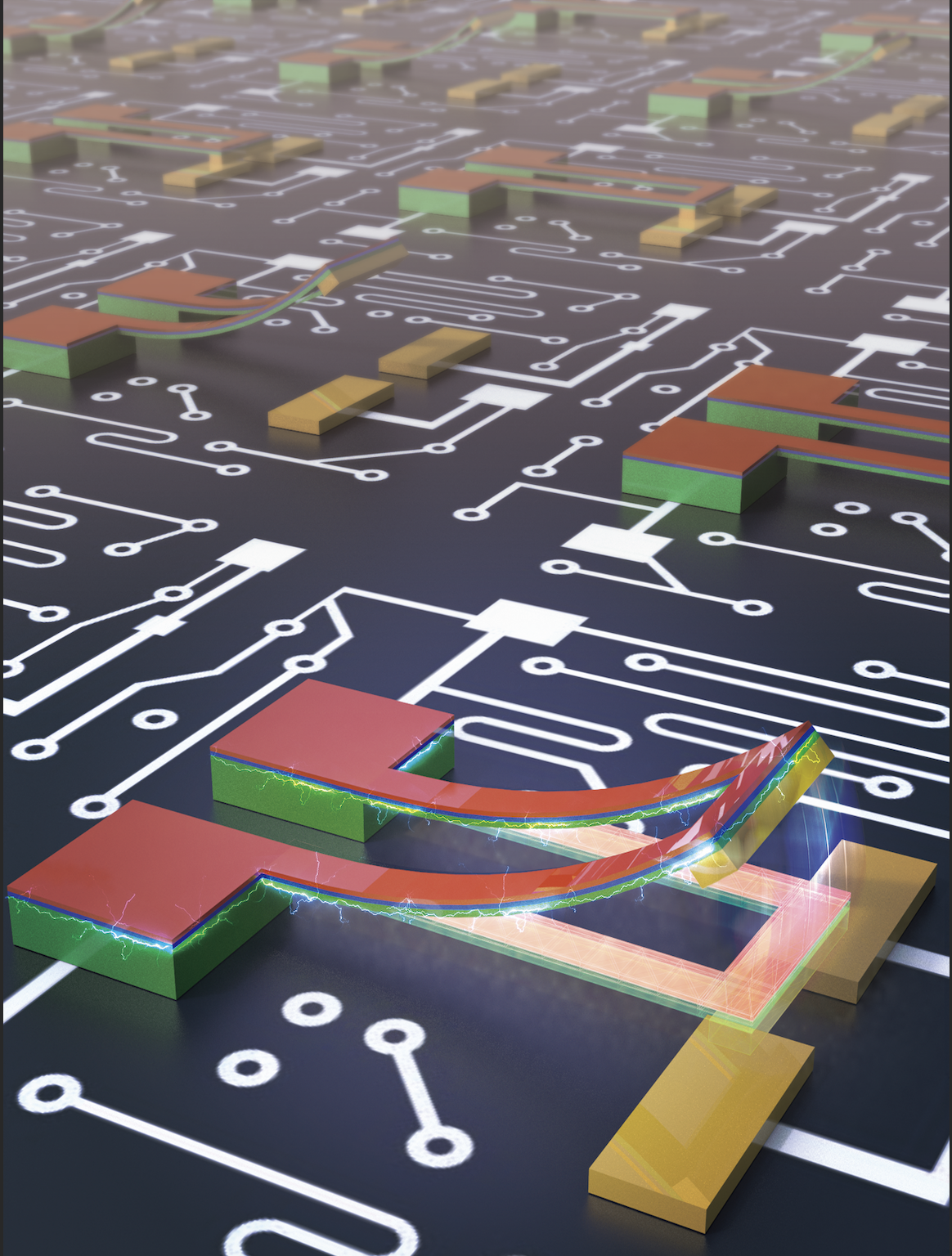
Micro-Electro-Mechanical Systems (MEMS) refer to a process technology used to create tiny integrated devices or systems that combine mechanical and electrical components. Ranging in size from micrometers to millimeters, these versatile systems form the core of our work, which encompasses their complete lifecycle: design, modelling, fabrication, and characterization.
Our current research focuses on pioneering zero-power smart MEMS sensors capable of operating without external power sources. These cutting-edge, ultra-low-power devices hold vast potential for applications in the Internet of Things, smart cities, robotics, embodied AI, and vehicles. Our approach combines novel functional nanomaterials, advanced multi-physics simulation, and artificial intelligence to drive innovation in next-generation sensing technology.
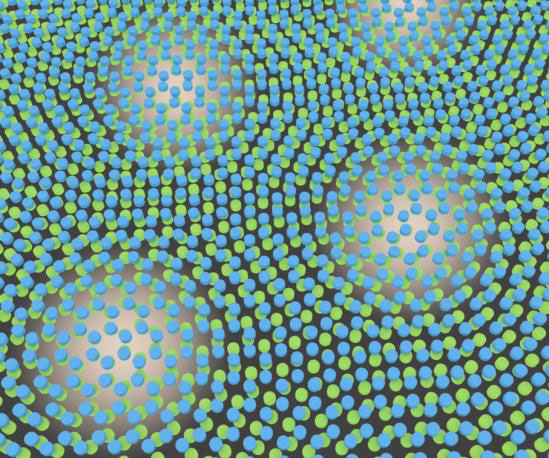
Moiré superlattices emerge when two periodic patterns are overlaid with a slight twist. Our group exploits moiré effects to engineer bosonic systems and realize exotic physical phenomena, paving the way for next-generation photonic and phononic devices in areas such as quantum computing, quantum devices, and nanoscale thermal management.
We are at the forefront of studying twisted bilayer photonic crystals (TBPCs), uncovering the novel phenomena arising from their unique structural configurations. Our research includes developing theoretical models to elucidate coupling mechanisms within TBPCs, which has led to the observation of photonic flat bands and the generation of optical vortices. In parallel, we are investigating the modulation of vibrational modes through phononic moiré systems.
AI-for-Science (AI4S) signifies the deep convergence of artificial intelligence with scientific research—a transformative paradigm that both advances AI through scientific challenges and accelerates discovery with AI-driven methods. Our group pioneers the application of data-driven approaches to material synthesis, device design, and fundamental physics exploration. We identify key limitations in current AI-assisted research and develop solutions to overcome them. Additionally, we are advancing the development of automated intelligent instruments and systems that significantly enhance the pace and scale of scientific experimentation.
Looking ahead, major breakthroughs are anticipated at interdisciplinary frontiers, where scientific discovery and technological innovation will be profoundly augmented by advanced AI techniques—including multimodal information processing, large language models, and physics-informed neural networks. Conversely, AI itself will benefit from continuous dialogue with science and engineering, leading to more interpretable, robust, and grounded intelligent systems.